
Captain Joe: Panzeri to lead Team USA Idaho
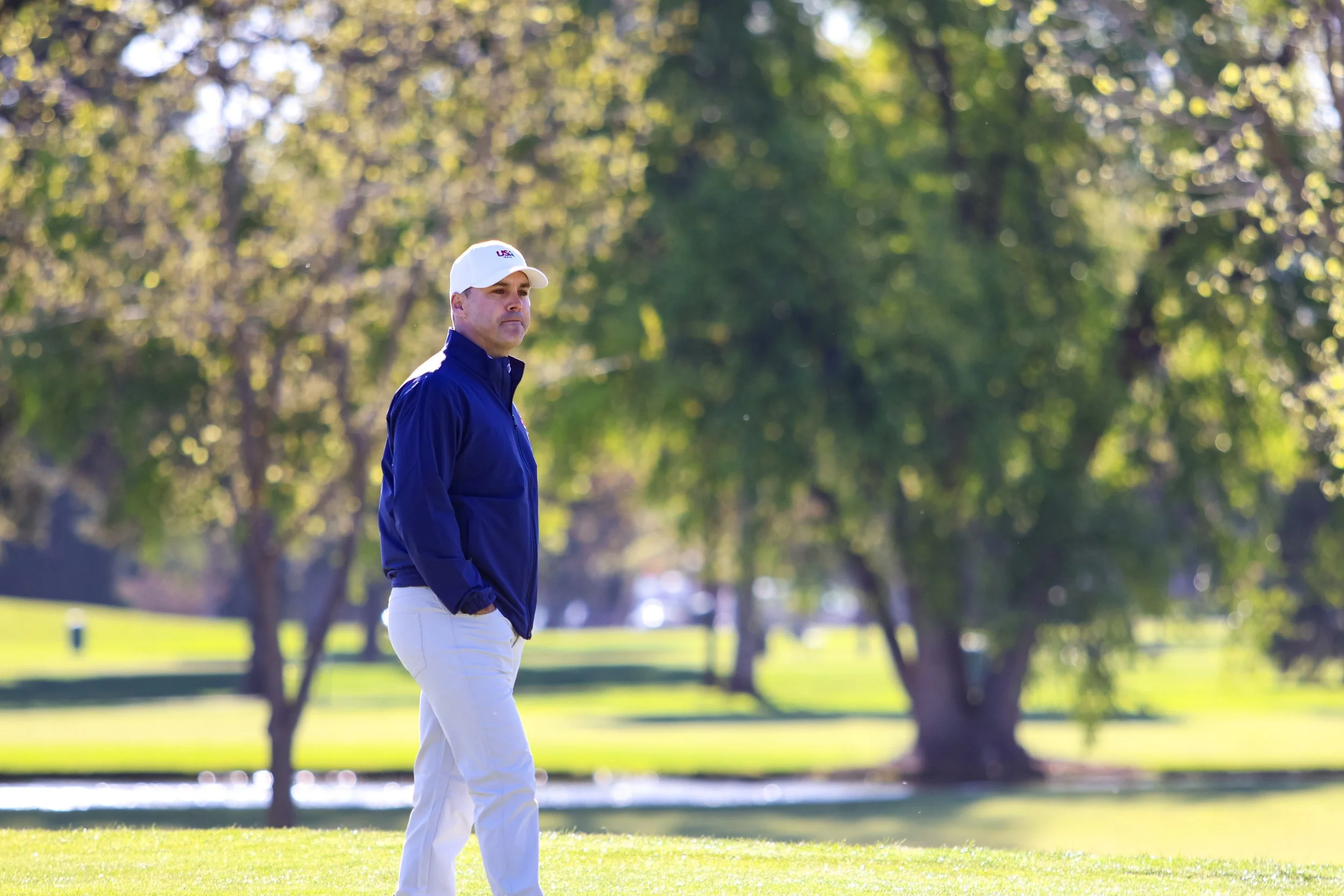
Joe Panzeri walks the short game area at Hillcrest Country Club. | Shane René
Over the 150 yards of short game area tucked between the back nine and the tennis courts at Hillcrest Country Club, Joe Panzeri made determined strides from end to end. His deputies set rings of tees and chalk lines around the cups. They placed soccer cones like tee markers in the rough and runoffs. A troupe of talented young golfers warmed up and waited for their captain to set sail.
“These kids will clean their grooves,” Panzeri said as he emptied a bottle of Kirkland Signature spring water on a row of navy-blue towels. “We’re going to do the little things right.”
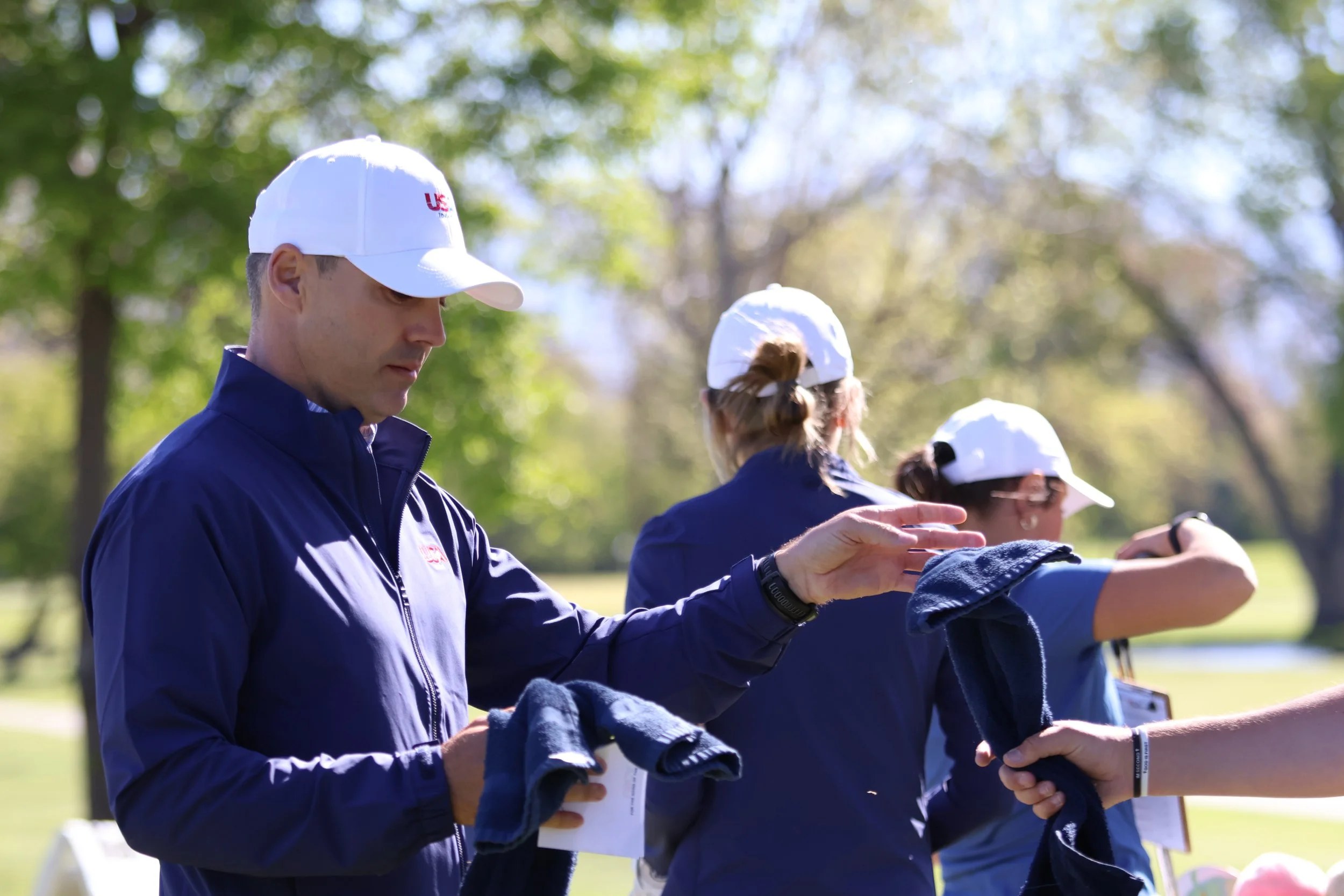
Panzeri handing out freshly soaked towels. | Shane René
Panzeri was tapped last fall to captain Team USA Idaho, the Gem State satellite of the USGA’s budding U.S. National Development Program (USNDP). For a country known around the globe as a force in everything besides soccer and cricket, a centralized approach to forging champions has never been the American way.
“I’m excited that the USGA sees that’s something we can work on here in the States,” Panzeri said. “There are other nations that have these junior programs. Canada has an unbelievable junior program — a national program — and Sweden has a huge national junior program. So, I think USNDP is a huge step in the right direction. And I’m honored to be a part of Team Idaho.”
Idaho was part of just the second wave of states to establish a USNDP State Team. The USGA says it aims to have a team in all states by 2033, each managed by local golf associations like the IGA. Together, those teams function as just one part of a larger program featuring a National Junior Team, an Elite Amateur Program, a Young Professionals Program and a USNDP Grant Program to help bridge the financial divide for those who need it. Cecilia Baney, the IGA’s Director of Junior Golf, didn’t hesitate to make her first phone call after the USGA broke the news.
“I already had the perfect person in mind to lead this team,” Baney said. “Joe not only has an exceptional background in competitive golf, he’s a huge part of the golf community here in Idaho. He has given so much back to the game through his involvement with local nonprofits like the Idaho Junior Golf Foundation and The First Tee of Idaho. Joe is someone the juniors can look up to not only for his golf knowledge, but also for the example he sets as a person beyond the game.”

Panzeri speaks to his troops. | Shane René
Panzeri, who turns 40 later this year, has been one of the top players in Idaho since high school, making regular appearances on IGA Cup Teams to this day. Last fall, his assistant captain and Four-Ball partner Dan Potter left BanBury Golf Course after posting 8-under par, one-shot shy of the lone qualifying spot for the U.S. Amateur Four-Ball Championship. But when Boise State players Cole Rueck and Luke Cushman eagled the 18th hole, Panzeri found himself alone in a playoff for first alternate. He battled the active, D1 duo for four holes, losing on the 13th when Cushman holed a 40-foot bender from the fringe. Mercifully, Rueck turned pro earlier this year, granting Panzeri and the once-absent Potter a spot in the Championship last month.
Like most players of his pedigree, Panzeri had a golf club in his hand by the time he was 10. And just five years later, he won the Eddie Hogan Cup (a junior cup event featuring teams from the Western U.S. and Canada) as an individual and found his way into the quarterfinals of U.S. Junior Amateur that same year. Then the college coaches started calling.
At the University of Washington, Panzeri helped his team to a PAC 10 title during his freshman year, as well as third place finishes at NCAA Regionals and Nationals. He then transferred to the University of San Diego for his junior year, where a broken hand derailed the end of his college career.
“To be honest, I kind of fell out of love with golf after college,” Panzeri said. “So I got a job, then I saw a buddy get his Tour card and I thought: what the heck am I doing? I’ve gotta try this — I miss golf.”
With his head back in the game, Panzeri signed up as an assistant professional at The Club at SpurWing to save cash and sharpen his game. Then he met Calvin Fillmore, a local golf lover with deep pockets and a faith in Panzeri’s talent.
“He’s a wonderful person,” Panzeri said. “He gave me the opportunity to go chase it.”
Panzeri chased his way into the top-ranks of the PGA Tour Canada, winning twice to earn status on the Korn Ferry Tour, and even managed to nab a spot in a PGA Tour event. But after six years on the road, he found himself sidelined by surgery and falling out of love with the travel-heavy lifestyle.
“So, I transitioned back to being in Boise, got into real estate, but I’ve always loved the game,” he said. “I always want to give back however I can because it’s done so much for me.”
Panzeri now finds himself with a unique opportunity to give back. He has a roster of eight of Idaho’s best — four boys and four girls — all aiming to live some version of the life that Panzeri has already lived. He knows what it takes to get there. And he knows how good these kids already are.
“They all have their own swing coaches; they all have their own short game coaches. They are all obviously extremely talented,” Panzeri said. “So, we’re not bringing them here to retool anything they already have. We’re just trying to give them a few more resources, a little bit of a platform and access to those resources to maybe get one or two shots better per round.”
The first Team USA Idaho practice at Hillcrest C.C. felt like an Advanced Placement (AP) class — an introduction to what college golf practices look like before you get there. Competition and precision are not optional. Working through drills as a team is about accountability as much as camaraderie.
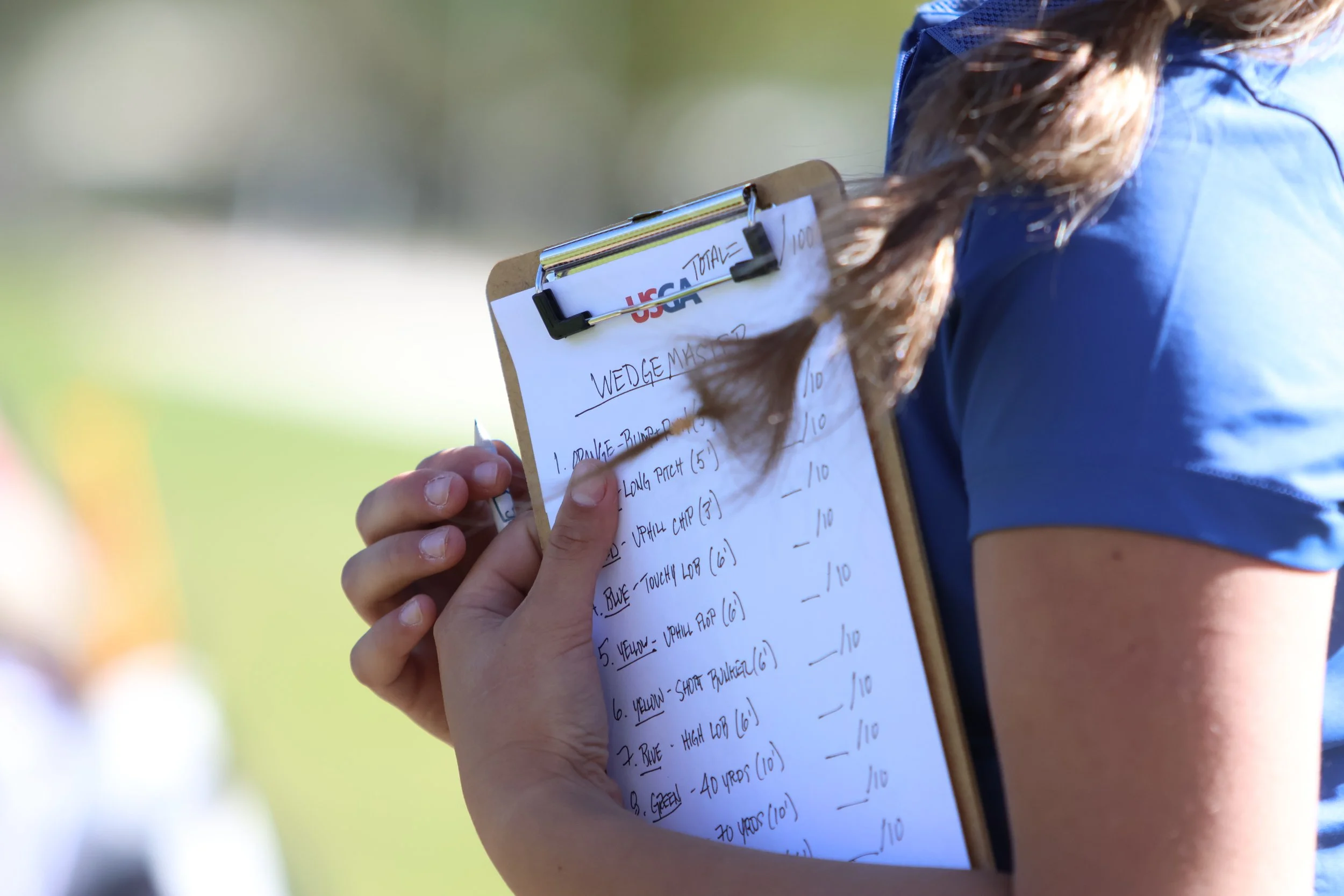
Wedge Master scoring sheet. | Shane René
First, players rotated through a Titleist Performance Institute (TPI) warmup and a short-range session. Then it was onto Wedge Master — a two-player team game where players hit 10 shots to 10 different hole locations around the green. Flop shots. Bumb n’ runs. Long pitch shots. Bunker shots. One point for anything in the circle, two points for hole outs. Everything you might see on the course, simulated in a game designed to make you executed under pressure.
Later in the day, Panzeri got the team together for “The Line Test.” Starting at 170 yards for the girls and 190 for the boys, players hit shots at the target, adding up the total number of feet they miss right or left of the line. Then they club down and repeat the exercise.
“They seem really simple if you break them down to ground level,” Panzeri said. “But if you do that line tests week in and week out, you are going to understand that my misses are getting better, my shot dispersion is getting smaller, therefore my scores are getting lower — I’m beating kids that I couldn’t beat a year ago. And the reason I’m beating them is because I’m doing these drills day in and day out.”
Panzeri is joined by three assistant captains. Dan Potter spent many years coaching Division One Golf. Nicole Bird did the same. And J.J. Astoriquia played at the University of Oregon, then took his own shot at professional golf before getting into the mortgage business where he became fast friends with Panzeri.
“He’s very organized, super competitive, and loves to give back to the game,” Astoriquia said. “And he’s a really good player — so it’s really good for the players if they do get to see him play or get to play with him that they are not listening to someone who hasn’t been there in the heat of the action.”
Astoriquia says part of his focus with kids has little to do with technique. Attitude and gratitude are things he hopes they all walk away with, no matter where golf takes them next.
“This first year we are learning a ton,” he said. “But we’ve got a great group of kids — a great group of coaches — and I think this will hopefully set a great foundation for many years to come.”
During lunch, Panzeri went around the table asking each of the kids to reflect on the Wedge Master game. What did they learn? How did they feel under pressure? What did they perform well in? What do they feel like they need to get better at?
Some talked about confidence — about not having it around certain shots. Some struggled to hit basic bunker shots with so many people standing around the green. Some were disappointed that they didn’t do well on the shots they felt were easy.
“The run-of-the-mill, short, little shot you should hit to three feet takes just as much attention as a really hard flop shot,” Panzeri said. “Stepping in with confidence and trying to execute that shot is all you can do — and if you do it, great, and if you don’t, learn from it and move on.”
“There is one other thing that everybody learned, right?” Astorqia said. “One thing that Joe was adamant about.”
“Clean your grooves!” burst out from a table surrounded by the future of golf in Idaho.